
Taking Your First Interstate Load? An Insurance Checklist for California Truckers
Before taking your first interstate load from California, check how your policy treats the new route, what filings apply, and whether you meet the broker’s requirements.
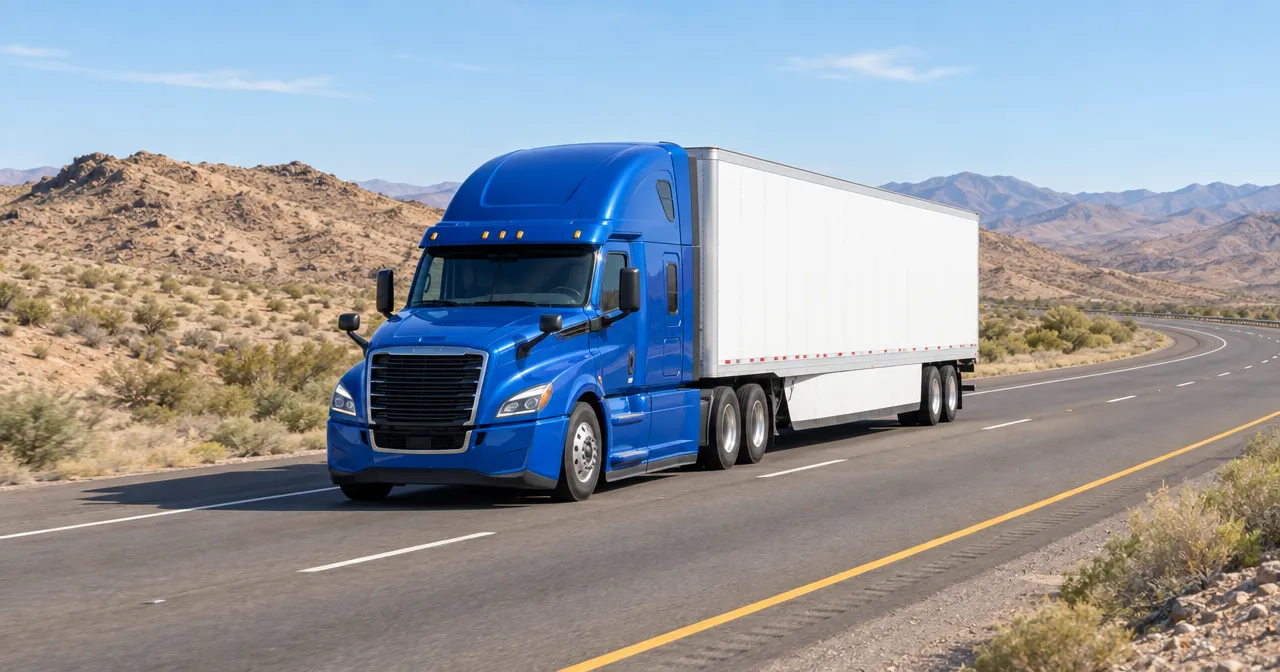
You haul packaged goods between Fontana and Los Angeles. On Thursday, a broker offers you a Friday pickup for delivery in Las Vegas. The same tractor and dry van can handle the freight. Your insurance certificate shows an active policy. Can you accept the load?
Before you commit to the pickup, get three separate answers: Does your insurance fit the trip? Are any required operating authority and filings in place? Does your coverage satisfy the broker’s contract? An answer to one question does not settle the other two. The review matters whether you’re an owner-operator taking a single out-of-state run or a fleet manager assigning one truck to a new weekly lane.
1. Find out what makes the load interstate
A California pickup and Nevada delivery is an obvious example of interstate commerce. But the state line on the driver’s route is not the only test. FMCSA’s interstate and intrastate guidance explains that a trip between two points in the same state can be interstate if it passes through another state or if it is part of a shipment that originates or ends outside the state or country.
Consider a box-truck carrier offered a run from a warehouse in Ontario, California, to a consignee in Riverside. The trip sounds local. But if the goods arrived from Arizona and the Riverside delivery was already part of that shipment’s planned movement, the California leg may be interstate. If the shipper instead took the goods into stock and assigned them to a separate local order later, the analysis can differ. A warehouse stop alone does not settle the question. FMCSA’s guidance on the intent of a shipment explains why the character of the movement matters.
Ask the broker or shipper where the shipment began, where it was intended to end, and whether your leg is part of that same movement. If the paperwork only shows your own pickup and delivery addresses, ask for clarification. Flag an uncertain shipment for a compliance review rather than deciding from the rate confirmation alone. A short run can be interstate, and a long run can stay within California. That distinction matters when you talk about operating radius with your insurer.
2. Ask how the policy treats the new route
Pull your current application, declarations, vehicle schedule, and endorsements. Give your agent the garaging ZIP code, pickup and delivery locations, states you’ll pass through, and expected frequency of the new lane. Include the return plan: driving the tractor without a trailer, pulling an empty trailer, or hauling a return load. If the farthest trip you expect is seasonal or occasional, say so rather than sending only your most common route.
Operating radius and coverage territory are different. The radius describes how far a truck works from its base. Ask how the insurer measures it. For example, the radius definition in Progressive Commercial’s glossary (under P–R) uses straight-line distance from the garaging point to the delivery point, not the miles on the odometer. Coverage territory, by contrast, is defined by the policy. A broad territory provision does not tell you whether a separate endorsement restricts use. Nor does a radius shown on a quote, by itself, tell you what an issued policy excludes.
Ask your agent these questions before dispatch:
- What did we report? Was the truck quoted for local California work, regional routes, or longer trips? Is the garaging location accurate for the unit assigned to this load?
- What do the issued forms say? Is the radius a rating or eligibility detail, or does an endorsement restrict the trip? Is there any separate restriction on the states, vehicle, or use involved?
- What needs to change? If the insurer needs to revise the policy, when would the change take effect? Ask for written confirmation and the relevant endorsement or updated schedule when applicable.
Tell the agent whether this is one trip or the start of recurring service. Don’t assume every out-of-state run needs a new policy, or that an occasional run is automatically allowed. For a fleet, identify which tractors and drivers might cover the lane, including any units you would realistically substitute. If the truck normally returns to a California yard but will start parking regularly at a Nevada terminal, report that separately from the destination itself.
3. Compare three different insurance requirements
Put the regulatory requirement, the customer’s written requirement, and the insurance actually in force side by side. They can give you three different answers even when everyone is talking about commercial auto liability.
Regulatory proof and operating authority
A USDOT number is not the same as active interstate operating authority. For-hire carriers transporting federally regulated property in interstate commerce generally need the appropriate authority; private carriers and for-hire carriers that exclusively haul exempt commodities are examples of operations that can be treated differently. Check FMCSA’s operating authority categories for the kind of work you plan to take rather than borrowing another operator’s checklist.
For one specific category, FMCSA’s insurance filing chart lists $750,000 in bodily injury and property damage liability for nonhazardous for-hire property carriers with a gross vehicle weight rating (GVWR) of 10,001 pounds or more. That is not a blanket rule for every hotshot, box truck, household-goods mover, or hazardous-materials carrier. Use the row that fits your operation.
When an insurance filing is required for federal operating authority, the financial responsibility provider files the applicable proof on the carrier’s behalf. Use your FMCSA Motus account to check the status of your authority and see whether a pending application is waiting for an insurance filing. Buying a policy or receiving a certificate for a broker does not activate authority. Confirm the authority you need is active and the applicable proof is on file before operating.
Keep California proof on a separate line. If a California Motor Carrier Permit applies to your operation, check its status and the applicable proof with California DMV. California DMV lists the MC 65 M as the insurance provider’s proof for the permit process. Don’t assume the federal filing replaces that proof. For help identifying which permit or registration questions need attention, use Lucila’s compliance intake.
Broker or shipper requirements
Suppose the Fontana-to-Las Vegas broker asks for $1 million in auto liability and $100,000 in motor truck cargo coverage. Those are hypothetical contract terms. A carrier with $750,000 in liability might meet the federal limit for the example above but still fall $250,000 short of this broker’s liability requirement. And although FMCSA lists no federal cargo insurance filing requirement for that nonhazardous property category, the broker can still require evidence of cargo coverage under its agreement.
Send the actual insurance provisions to your agent. Look for separate instructions on the liability limit, cargo deductible, and any requested endorsements. Check the name of the company signing the agreement against the named insured. If the broker asks you to add it to the policy, clarify whether it wants a certificate addressed to it or coverage as an additional insured. Our trucking certificate of insurance guide explains why those requests aren’t interchangeable.
Coverage for the truck, the trailer, and the freight
Even if the route and liability limit check out, look at what changes once the truck leaves its usual lane. If the outbound load is boxed paper goods but the backhaul is electronics, ask whether the second commodity is eligible, how its load value compares with the applicable limit, and whether a theft sublimit or an overnight parking condition applies. A certificate that shows a cargo limit does not answer those questions. For reefer freight, ask which causes of temperature loss are covered; Progressive’s cargo overview illustrates how refrigeration breakdown can be offered separately. Your insurer’s terms may differ.
Also verify physical damage for the assigned tractor and any owned trailer if you want protection for that equipment. If a shipper provides a trailer you’ll drop at another yard, send the agreement to your agent. Ask about damage to the trailer while it’s attached and while it’s in your custody but detached. Neither the cargo limit nor physical damage on the tractor answers whether the borrowed trailer itself is insured. See our trailer interchange and non-owned trailer guide for what to check in the agreement.
4. Send a route brief instead of asking, “Am I covered out of state?”
The quickest way to show what’s changing is to put your current work and proposed work into one message. Here’s a sample an owner-operator could adapt:
We currently haul packaged dry goods in Southern California. The tractor and our owned dry van are garaged in Fontana. We’re considering a Friday pickup in Fontana for Saturday delivery in Las Vegas. The outbound shipment is packaged paper goods valued at $65,000, and the trailer will be loaded overnight. We expect to return empty unless we book a separate load. This is a trial run; the broker may offer it twice a month. Please review the attached agreement and confirm how the policy treats this route and whether any coverage changes or filings are needed before pickup.
Add your legal business name, USDOT number, operating authority status if applicable, the assigned truck and trailer details, and whether you’re hauling under your own authority or under a lease to another carrier. Include the policy number and relevant insurance documents if you already have coverage. If a backhaul is undecided, say that and review it before booking it. The point is to describe the operation you actually expect, not to predict every trip you’ll take next year.
If you’re comparing quotes, give each agent the same route brief. One proposal based on local California work and another based on regular Nevada and Arizona trips aren’t comparable on price alone. Ask each agent to identify the assumed radius or service area, the limits and deductibles, any applicable restrictions, and which filings the insurance provider can make. If Texas, Colorado, or Oregon is only a possibility, keep those lanes separate from the routes you’ve already committed to.
5. Make the final dispatch decision
For a new venture, work backward from the proposed pickup date. For an established fleet, assign one person to gather the answers and one person to clear the load in dispatch; in a one-truck business, that can be the same person. Keep a short record of what was confirmed:
- Policy: The applicable insurance fits the planned trip, equipment, and freight. Any needed changes take effect before the truck starts the assignment.
- Authority and permits: Any required authority and permits are active, with applicable insurance proof on file. A pending application stays marked pending.
- Customer: The broker or shipper has accepted the required documentation. Any change to its requirements is in writing.
If a required item is still open, hold or reschedule the load rather than sending the driver while you wait for an answer. Once the lane becomes recurring, keep the information with your policy records and revisit it when the garaging location, equipment, commodities, or delivery area changes.
Lucila’s Insurance Services reviews commercial auto liability, motor truck cargo, and physical damage for California owner-operators, new ventures, and fleets. Its team can discuss the proposed route in English or Spanish. When you request a commercial trucking insurance quote, have your first pickup date, route brief, and any broker requirements ready so the review starts with the load you actually plan to haul.
This article is general insurance information, not legal advice or a determination of coverage. Confirm applicable requirements with the relevant agencies and review the issued policy and endorsements with your insurance representative.