
Motor Truck Cargo Insurance Limits for California Carriers: A Load-by-Load Guide
Learn how to compare cargo limits with actual load values, spot commodity and reefer gaps, and prepare a clearer California trucking insurance quote.
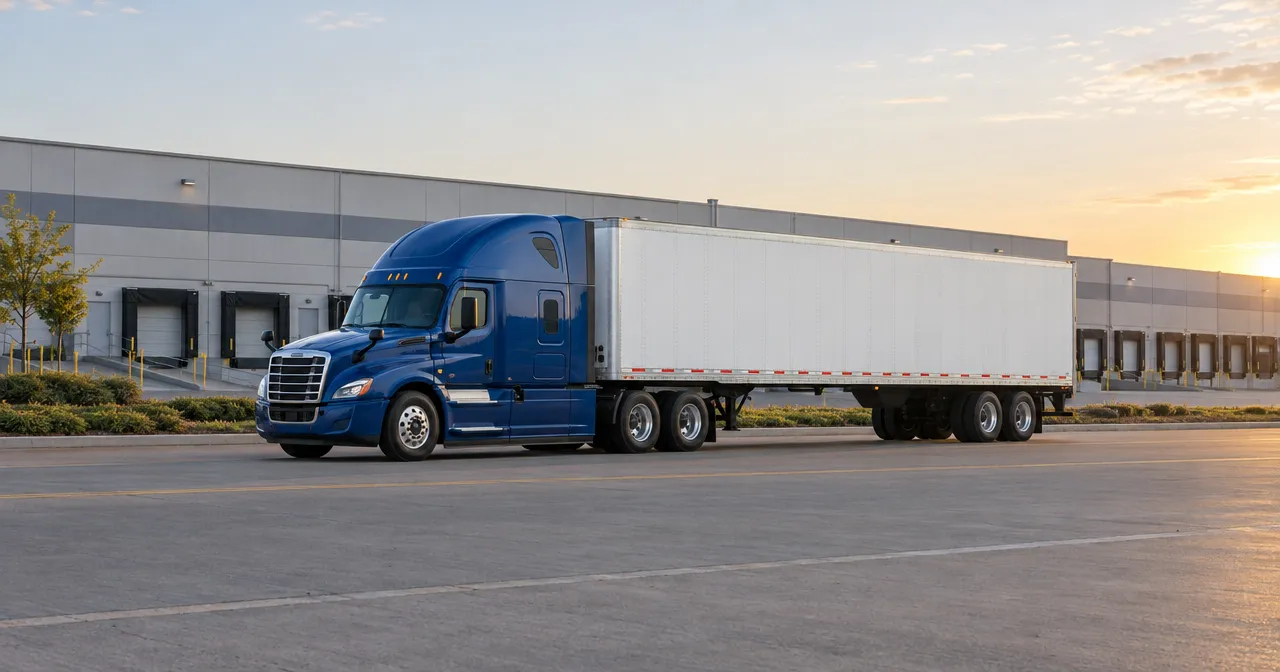
A California carrier may haul ordinary boxed freight most weeks and accept a much more valuable load next Tuesday. If the motor truck cargo limit was chosen only to satisfy a broker’s certificate request, the unusual load can expose a gap that the certificate does not reveal. The same problem can appear when a box truck adds a new customer, a flatbed begins moving machinery, or a reefer switches from shelf-stable goods to temperature-sensitive produce.
The useful question is not simply “How much cargo insurance do I have?” It is: Which goods, on which equipment, at what value, and under which conditions will the policy respond? Here is a load-by-load way for California owner-operators and fleets to prepare for that conversation.
First, separate cargo from the other truck coverages
Motor truck cargo insurance addresses covered loss or damage to freight a carrier transports. A collision, fire, or theft may be among the events a policy covers, subject to its actual terms. It is different from primary commercial auto liability, which addresses covered injury or property damage to others arising from vehicle use, and physical damage insurance, which addresses the insured truck itself. A single wreck can involve all three exposures, but one limit does not substitute for another. Progressive Commercial’s cargo overview distinguishes freight coverage from physical damage and gives examples of covered events and restrictions.
Do not confuse a federal filing with a cargo limit. FMCSA’s cargo-insurance FAQ, last updated May 26, 2023, says household-goods carriers and household-goods freight forwarders are required to have cargo insurance under the federal rule it describes. That is not a universal federal cargo-insurance minimum for a carrier moving general freight. Shippers, brokers, contracts, lenders, and applicable state rules can still influence what coverage your operation needs. Ask about the requirements that actually apply to your authority, routes, and freight rather than assuming one number fits every carrier.
Start with your highest plausible load, not your average load
Pull recent bills of lading, rate confirmations, customer specifications, and invoices or declared values. List the goods you actually move, then identify both a typical load and a plausible high-value load for each equipment type. If a customer’s contract assigns a particular valuation or liability obligation, bring that document to the coverage review. A “$100,000 cargo” requirement may be only a screening threshold; it does not establish that every future shipment will be worth $100,000 or less.
Consider a hypothetical Southern California dry-van carrier. Most loads are packaged household products valued around $65,000, but an occasional electronics shipment is valued at $145,000. A $100,000 limit would leave at least $45,000 of that load above the stated limit if a covered total loss occurred, before accounting for any deductible, sublimit, valuation rule, exclusion, or other policy condition. The conclusion is not that every carrier needs $145,000 of coverage. It is that the operator should either discuss a suitable higher limit or make an informed decision not to accept loads that exceed the protection available.
The same exercise matters for a small fleet. Two tractors may each carry valuable shipments at the same time. Ask whether the quoted amount applies per truck, per occurrence, per shipment, at a terminal, or in another way. Do not add the limits shown for separate units or assume that two loads at one location are treated as two independent claims. Review the declarations and relevant forms, not just a figure on a quote. Insurers may structure coverage differently: Great American’s motor truck cargo product page describes both scheduled-vehicle and blanket approaches, as well as customizable limits and deductibles. That example illustrates available policy designs, not a promise that a particular form is available for your operation.
A simple worksheet before choosing a limit
For each recurring lane or customer, record:
- Commodity and shipment value: What is on the bill of lading, and what is the highest credible value you may agree to move?
- Equipment: Tractor and dry van, reefer, flatbed, box truck, hotshot pickup and trailer, or another configuration. Note who owns or leases each unit.
- Route and custody: Where is the load picked up and delivered? Does it pass through California into Arizona, Nevada, Texas, Colorado, or Oregon? Will it spend time at a yard, dock, or third-party location?
- Peak concentration: How many loaded vehicles or trailers might be in one yard at once, and what are their combined values?
- Written requirements: Which broker or shipper asks for a cargo amount, special endorsement, or specific proof of insurance?
This worksheet is not an underwriting form. It makes the conversation about a cargo limit more precise than “I haul general freight.”
Read deductibles and smaller limits alongside the headline number
A policy can show a large cargo limit and still require the insured to absorb a meaningful part of a covered loss. The deductible is the amount of a loss the insured pays under the policy’s terms; the limit caps the insurer’s payment for a coverage. Some forms also use lower limits for certain commodities, situations, or expenses. The California Department of Insurance glossary defines deductibles, limits, exclusions, policies, and endorsements in plain language.
For a carrier comparing two proposals, put the cargo limit, deductible, and any special sublimits side by side. A low deductible is not automatically better if the rest of the coverage excludes an important commodity. Conversely, a higher deductible may be manageable for a well-capitalized fleet but disruptive for a new venture. Ask how the deductible applies when a loss involves both cargo and vehicle damage; those are separate coverage parts and may have different deductibles. Do not estimate a claim payment from the certificate alone.
Match the policy to the freight and equipment
Dry van and box truck: Mixed retail inventory is not one uniform exposure. Electronics, apparel, furniture, and paper products may have very different values and insurer restrictions. Confirm that a newly added commodity is acceptable before promising a customer protection that has not been reviewed. A local box-truck run can carry a high-value shipment even when the route is short.
Refrigerated freight: A collision policy for cargo does not necessarily answer the question of spoilage from a failed refrigeration unit or a temperature deviation. Ask specifically whether refrigeration breakdown, temperature change, driver error, or spoilage is covered; what triggers coverage; whether maintenance, monitoring, or records are required; and whether a separate deductible or sublimit applies. Great American lists refrigeration breakdown as an optional cargo coverage on its product page, while Progressive describes refrigeration-breakdown coverage and additional variations on its own form. Neither description means a reefer endorsement is automatically on your policy. Save temperature logs and maintenance records as part of your normal operating documentation.
Flatbed and hotshot: Identify the actual commodity—steel, machinery, building materials, or another item—and how it is secured. Ask whether a loss while loading or unloading is within the policy’s definition of transit and whether special cargo, tarps, chains, or equipment are treated separately. Great American describes a form whose transit definition includes loading and unloading; that feature should be verified on the policy you are considering, not assumed for every insurer.
Non-owned trailers and interchange: Freight protection is not automatically protection for a trailer you do not own. A borrowed, leased, or interchange trailer creates a different property exposure. If your operation uses these trailers, ask about trailer interchange or non-owned trailer coverage separately from cargo and describe the agreements that assign responsibility for damage.
Look for the conditions that change a seemingly straightforward claim
Policy wording matters most in ordinary operational transitions: a driver parks overnight, a load is transferred to another carrier, or freight sits at a dock longer than planned. Progressive’s cargo page, for example, lists restrictions involving certain commodities, custody by another carrier, and extended storage under its own product. That is evidence that exclusions vary—not a list of exclusions in Lucila’s policies. Bring up the following questions before binding:
- Parking and security: Is theft covered if the unit is unattended? Are there lock, alarm, location, or reporting conditions? Does the answer change at a truck stop versus a fenced yard?
- Stops, storage, and transfer: When does transit begin and end? What happens during loading, unloading, a delay at a receiver, temporary storage, or a subcontracted leg?
- Commodity description: Does “general freight” accurately describe everything you haul? Are any goods excluded, subject to approval, or covered only to a lower amount?
- Loss valuation: Will payment be measured by invoice, replacement cost, actual cash value, the carrier’s legal liability, or another contract-and-policy measure? How are salvage and damaged-but-repairable goods handled?
These are prompts for a policy review, not universal exclusions. The insurer’s issued forms, endorsements, and facts of a claim control the answer.
Use certificates to confirm coverage, not to create it
A broker may ask for a certificate of insurance (COI) before dispatching a load. Have the written requirement ready: exact insured business name, requested limits, certificate holder, and any contract-specific wording. A COI can communicate information about insurance, but it should not be treated as a substitute for the policy or a requested endorsement. The California Department of Insurance describes an endorsement as an amendment to a policy that adds or deletes coverage. If a shipper asks for something your current policy does not provide, the answer is to review whether the insurer can make an appropriate policy change—not merely to request a different-looking certificate.
Check the dates as carefully as the limits. If the load begins after renewal or after a truck or trailer has been added, confirm the current policy information and effective changes before departure. Fleets should also tell their agent when they add drivers, change operating radius, begin hauling a new class of freight, or shift from local deliveries to longer regional or over-the-road routes. Those changes may affect several coverage parts, not only cargo.
Bring a useful packet to the quote conversation
For a new venture or an established California fleet, the most useful starting packet includes the legal business name and authority status; vehicle and trailer details; driver information; operating states and typical radius; a concise list of commodities; typical and peak load values; any loss history requested by the insurer; and copies of broker or shipper requirements. Flag reefer operations, high-value goods, non-owned trailers, subcontracted hauls, and time spent storing loaded equipment. Be candid about unusual loads—even if they account for only a small share of revenue.
Lucila’s Insurance Services works with owner-operators and fleets on commercial trucking coverage, including motor truck cargo, primary liability, physical damage, and trailer-related options. Its bilingual English/Spanish team can review routes, equipment, contracts, certificates, policy changes, and renewals with you. A quote review should end with a clear list of what is covered, what is not, the applicable limits and deductibles, and what must change before you accept a different load. Availability and terms depend on the insurer and the individual operation.
Review your next load before it becomes a coverage surprise
If your freight mix has changed—or a broker has asked for a higher cargo limit—prepare a few representative bills of lading and the written insurance requirement. Then request a commercial truck insurance quote for a review of cargo alongside liability, physical damage, and any trailer exposures. Share your highest-value load and the equipment that will carry it; that information is more useful than a certificate target by itself.