
Adding a Truck and Driver to a California Fleet Policy: A Pre-Dispatch Checklist
Before a new truck and driver take a California load, check effective dates, liability, physical damage, cargo, driver approval, and certificate details.
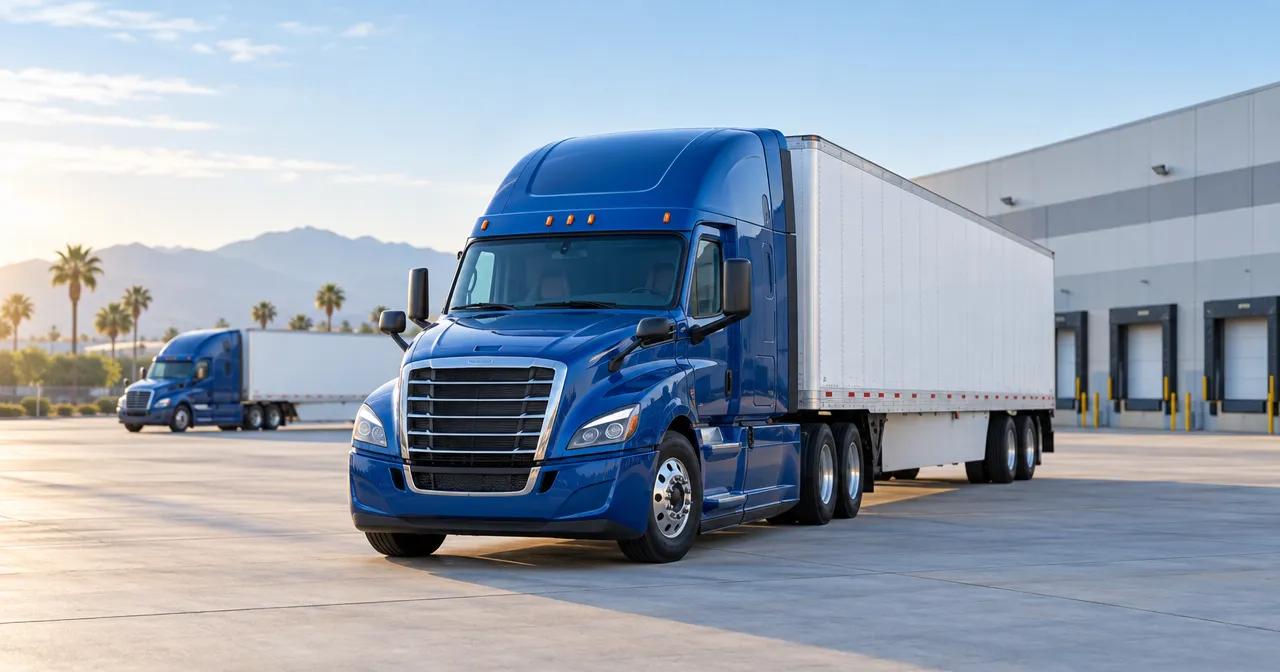
A new tractor arrives on Thursday. Its first load leaves a California warehouse Friday morning, and the dispatcher has already promised the broker a certificate of insurance. The fleet owner has emailed a VIN to the agent—but has the insurer accepted the truck, approved its driver, and confirmed every coverage needed for that load?
Those are separate questions. Adding a vehicle, adding a driver, changing what you haul, and issuing a certificate are not one transaction. Each can involve a different policy condition or document. Whether you run two box trucks around Los Angeles or a growing tractor fleet across California, Arizona, and Nevada, the safest workflow is to finish the coverage review before you assign the first load. Here is a practical way to do it without confusing insurance changes with registration or driver-qualification paperwork.
Decide what is actually being added
Start by describing the operation, not simply asking to “add a truck.” Is the vehicle purchased, financed, leased, borrowed temporarily, or replacing a sold unit? Who is the titled owner and who is the named insured? Is the addition a tractor only, a tractor and owned trailer, or a truck that will pull someone else’s trailer? When will the business take possession, and when might anyone drive it—even for a test or a trip from the seller to the yard?
Next, describe the assignment. A day cab making California warehouse deliveries is different from a sleeper tractor moving high-value freight to Texas. A refrigerated box truck may carry temperature-sensitive produce; a flatbed or hotshot setup may handle machinery under different loading and securement arrangements. Your insurer needs a true account of equipment, commodities, routes, operating radius, drivers, and anticipated use to evaluate the change. If the business is also changing from intrastate to interstate work, flag that rather than treating it as a routine unit swap.
An easy starting record has one line per vehicle: VIN, year/make/model, body or trailer type, ownership or lease status, purchase or lease date, stated or current value requested for physical damage, garaging location, assigned drivers, and intended first dispatch date. For a fleet, compare that line with the existing schedule so a replacement is not accidentally treated as an extra unit—or an old unit removed while it is still in service.
Review four exposures separately
1. Primary commercial auto liability. This responds, within the policy’s terms, to covered bodily injury or property damage claims involving others. Confirm that the newly acquired truck fits the policy’s definition of a covered auto, that any required listing or insurer approval is complete, and that the limit and form meet applicable operating and contract requirements. Do not assume an existing fleet limit or an automatic-coverage clause applies to the new vehicle without checking the issued policy. FMCSA’s insurance-filing guidance, updated March 26, 2026, explains that federal financial-responsibility and filing rules vary by authority, cargo, and vehicle type; the required insurance form is filed by the financial-responsibility provider for applicable operating authority. A broker’s requested certificate is not that federal filing.
2. Physical damage on the equipment. Liability for harm to others does not repair the new truck. Ask whether collision and comprehensive or other selected physical-damage protections will apply, what value basis the insurer uses, and what deductibles you have chosen. A lienholder or lessor may have its own insurance provisions; bring the financing or lease agreement for review. Progressive Commercial’s physical-damage explanation separates vehicle damage from liability and notes that non-owned trailers may need distinct treatment. Its specific forms are examples, not a description of every insurer’s policy or Lucila’s offerings.
3. Motor truck cargo. The truck’s inclusion on an auto policy does not prove the freight inside is covered. Confirm the cargo policy or endorsement applies to the new unit and the intended commodity, with a limit that makes sense for the loads you will accept. Ask whether the limit is per vehicle, per occurrence, or subject to another arrangement; identify deductibles and any lower limits. A reefer assignment warrants a specific question about spoilage, refrigeration breakdown, temperature-change conditions, and records. An insurer’s cargo coverage overview illustrates why freight protection is distinct from protection for the vehicle; exclusions and optional terms vary by policy.
4. Trailer responsibility. If the operation owns the trailer, discuss how it is listed and insured. If it pulls an interchange or other non-owned trailer, bring the interchange agreement, lease, or broker terms so the agent can discuss trailer interchange or non-owned trailer protection. Cargo coverage is not a substitute for coverage on the trailer itself. In each of these four areas, ask for the actual policy provision or insurer confirmation that addresses the new unit—not merely a quote that mentions “fleet coverage.”
Treat driver approval as its own decision
Give the insurer the proposed driver’s name, license details, experience, and any information it requests for underwriting. Ask whether that person must be specifically scheduled, whether an excluded-driver or other restriction applies, and when the insurer will consider the driver acceptable under the policy. Never equate sending a CDL photo with approval. A driver who occasionally fills in for another employee deserves the same advance question as a full-time hire.
Insurance review is separate from safety compliance. For motor carriers subject to the federal driver-qualification rules, 49 CFR § 391.51 requires a qualification file for each employed driver and identifies records such as an employment application, licensing-authority motor vehicle record, and road-test documentation or an accepted equivalent. Which qualification, medical, CDL, drug-and-alcohol, and state rules apply depends on the operation and driver; work through those with the responsible compliance professional. A policy listing does not replace a qualification file, and a completed qualification file does not make an insurer accept the driver.
Ask about employee-versus-independent-contractor arrangements as well. A leased owner-operator driving under another carrier’s authority may have different contractual and insurance responsibilities from an employee driving the fleet’s company-owned truck. Put the operating agreement and who dispatches the unit on the table; do not assume one party’s policy fills every gap.
Get the effective date and confirmation before the keys move
A verbal plan to add a truck, a submitted application, a quote, and issued coverage are different milestones. The California Department of Insurance glossary describes a binder as a temporary or preliminary coverage agreement and an endorsement as an amendment to a policy. Ask your agent exactly what document confirms coverage, which coverages it confirms, and the effective date and time. Read the vehicle and named-insured details on it. If a lender requires particular wording, confirm that requirement separately rather than assuming an email request satisfied it.
This matters during handoff. Suppose a California carrier buys a used tractor Thursday afternoon, sends the VIN at 4:45 p.m., and sends a driver to collect it at 6 p.m. If the insurer has not confirmed the change, no one should infer from the email alone that the tractor’s liability and physical damage coverages are in force for the pickup drive. Arrange the insurance review in advance; if the timeline moves, ask the agent what can actually be bound and documented before possession or operation. The exact answer depends on the policy and insurer, not a universal grace period.
A second example: a three-truck fleet adds a fourth tractor and plans to haul refrigerated freight to Nevada. Even if liability on the tractor is confirmed, the operator still has to verify the driver, cargo eligibility and reefer terms, the trailer arrangement, and any broker requirement for the out-of-state lane. One accepted vehicle change does not silently approve a new commodity, driver, or route.
Read the broker request alongside the policy
Before asking for a certificate of insurance (COI), collect the broker or shipper’s written requirements. Record the correct legal insured name, certificate holder, requested liability and cargo limits, the dates of the move, and any demand for an endorsement or special status. Compare the request with the actual coverage. A certificate reports information about insurance; it should not be treated as a way to change an exclusion, raise a limit, or insure a truck that has not been accepted. If the contract asks for more than the policy provides, ask whether the insurer can make the required change and at what effective date.
For example, a broker might require proof of $100,000 cargo coverage while a particular machinery shipment is worth substantially more. The certificate threshold does not set the value of the load or promise the insurer will cover every commodity. Likewise, an agreement requiring trailer interchange protection should prompt a check of the trailer arrangement, not a generic cargo certificate. Request the updated COI only after the underlying coverage and effective dates have been confirmed.
Prepare one concise packet for an add-on or new quote
Send these details together to reduce back-and-forth:
- Business and authority: legal insured name; existing policy number if applicable; USDOT/MC details when relevant; whether the operation is local, regional, or over-the-road.
- Vehicles and trailers: each VIN, year, make, model, equipment type, ownership or lease agreement, intended value, lienholder or lessor information, garaging address, and possession date.
- Drivers: names, license information and experience requested for underwriting, planned assignments, and any new-hire or leased-owner-operator arrangement.
- Loads and routes: commodities, typical and high-value loads, California lanes and any Arizona, Nevada, Texas, Colorado, or Oregon work, plus planned changes in radius or overnight parking.
- Requirements and timing: broker/shipper insurance language, requested COI details, intended first-use date, and whether an existing truck or driver is being replaced.
For a brand-new venture, there may be no existing policy to amend. The agent will need to place appropriate coverage rather than assume a truck can be added to a fleet that does not yet exist. Ask who will make any required federal insurance filing and verify the authority status before accepting a load. For an established fleet, give both the add and remove dates if equipment is being exchanged; keep confirmation of each change with the policy records.
Close the loop after dispatch
When the insurer issues the endorsement or other confirmation, compare it with the dispatch record: VIN, driver, coverage parts, limits, deductibles, and effective date. Update the internal equipment list and give dispatch a clear rule to stop assigning a unit when approval is incomplete. Recheck that list at renewal, when the cargo mix changes, or when a driver leaves. An insurance change is not necessarily a substitute for updating government records; FMCSA’s registration-update guidance explains the separate USDOT information-update process and biennial schedule for entities under its jurisdiction.
Lucila’s Insurance Services assists California owner-operators and fleets with primary commercial auto liability, physical damage, cargo, and trailer-related coverage reviews, along with certificate requests, policy changes, and renewals. Its English/Spanish team can help translate your equipment list and broker requirements into a more precise insurance conversation. Terms, availability, and whether a change can be made by a particular date depend on the insurer and your operation.
Request a review before the next truck takes a load
If you are adding a tractor, box truck, reefer, flatbed, hotshot, trailer, or driver, include the intended first-use date and written broker requirements when you request a commercial trucking insurance quote. Ask for confirmation of the vehicle, driver, cargo, and effective date before dispatch—not just a certificate.